
5-Amino-1MQ Powder Color Variations: Salt Forms, Degradation, or Batch Variance?
In this article
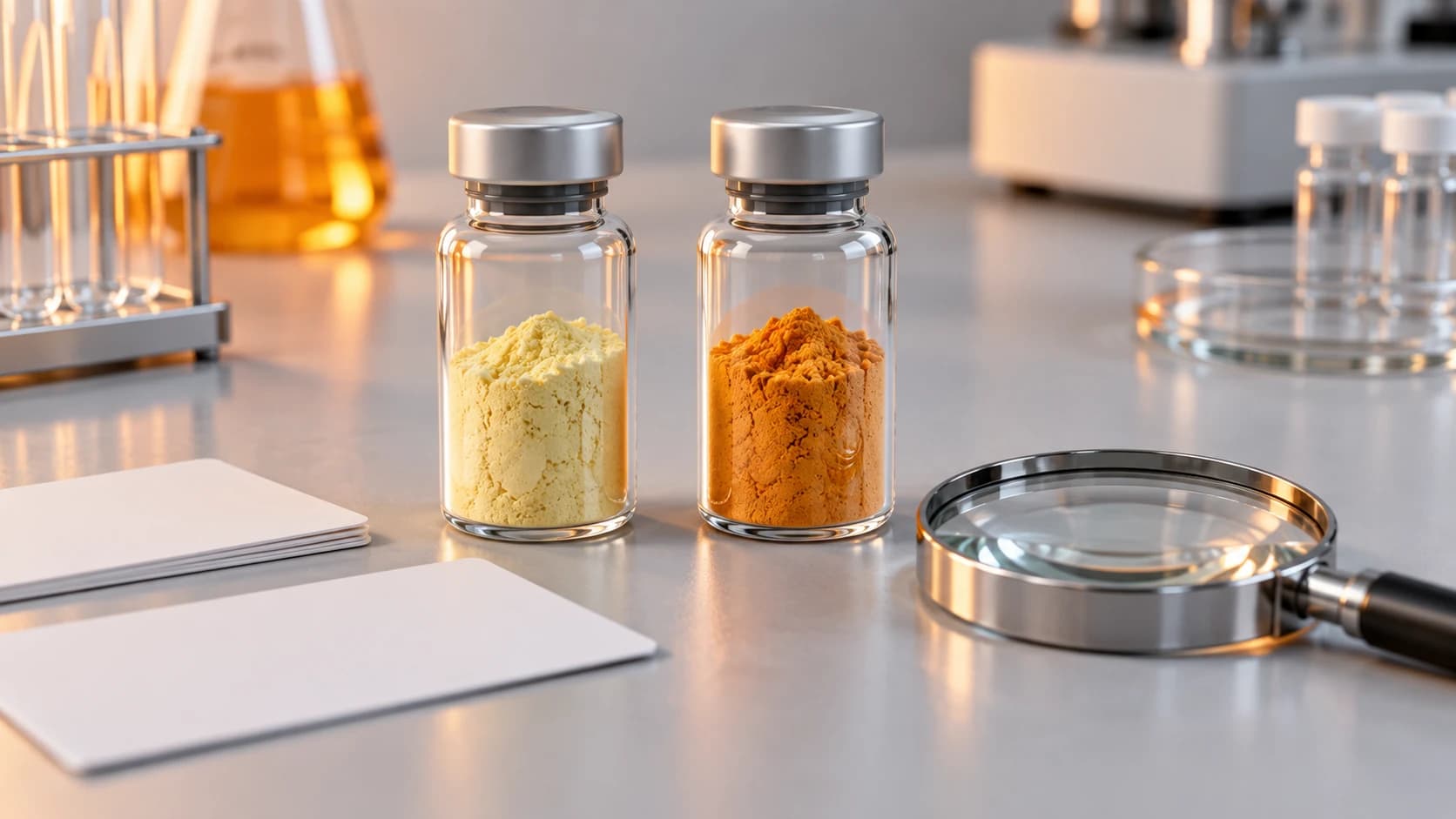
When unboxing research materials, visual consistency is often the first metric buyers rely on. Recently, a discussion on the Reddit PeptideForum highlighted a common point of confusion among procurement specialists and independent researchers. As noted in the thread, a user observed that "One vial contains a darker orange powder, while the other is a paler shade and appears to have a few darker orange particles/bits inside."
Such discrepancies immediately trigger critical questions: Does a color shift indicate different salt forms, chemical degradation, or foreign adulteration? In scientific and peptide sourcing, visual inspection alone cannot diagnose compound integrity, but understanding the underlying variables helps clinics, resellers, and researchers establish robust verification protocols.
The Chemistry Behind 5-Amino-1MQ Appearance
5-Amino-1-methylquinolinium (5-Amino-1MQ) is a small molecule acting as an inhibitor of nicotinamide N-methyltransferase (NNMT), a key enzyme in cellular metabolism. In its raw or lyophilized form, small-molecule powders can exhibit variations in hue due to several non-hazardous or manufacturing-related factors.
1. Salt Forms and Counter-Ions
The specific salt form—such as a chloride or iodide variant—can subtly influence the physical appearance and crystalline structure of a raw material. Different salt complexes or varying degrees of hydration can alter how light reflects off the microscopic facets of the powder, leading to lighter or darker shades of yellow and orange without altering the active moiety's chemical identity.
2. Particle Size and Micronization
Lyophilization (freeze-drying) and milling processes rarely yield uniform particle sizes across different production runs. Finely micronized powders often appear lighter or whiter due to increased light scattering, whereas denser, coarser aggregates can concentrate color, making them appear darker or speckled.
3. Excipients and Residual Moisture
Trace moisture exposure or minor differences in residual excipients can induce localized chromatic shifts. A slightly higher moisture content can cause micro-caking or caramelization-like darkening under ambient lighting, which is a physical characteristic rather than an indicator of product failure or active degradation.
Swipe or scroll to compare all columns.
Swipe or scroll to compare all columns.
| Observation Factor | Potential Chemical or Physical Cause | Does It Affect Identity? |
|---|---|---|
| Pale vs. Dark Orange Shade | Crystal packing, micronization degree, or batch-to-batch drying dynamics. | No; structural identity remains consistent. |
| Speckles / Darker Particles | Minor agglomeration or localized moisture exposure during lyophilization. | No; typically physical variance rather than contamination. |
| Drastic Color Transformation (e.g., Brown/Charred) | Severe thermal degradation or chemical impurity. | Yes; requires rigorous analytical verification. |
Why Visual Inspection Is Never Enough
Relying on color as an absolute proxy for safety or potency is scientifically unreliable. While an unexpected hue can serve as an initial trigger for further investigation, it should never be used as a standalone metric to validate efficacy or reject a batch.
Comprehensive evaluation requires looking past the visual presentation and examining objective analytical data. For a deeper look into the foundational science of NNMT inhibition, explore our 5-Amino-1MQ Research Hub.
How Procurement Specialists and Researchers Should Verify Batches
To safeguard laboratory workflows and supply chain integrity, buyers must implement structured verification protocols rather than relying on subjective guesswork:
- Review the Certificate of Analysis (COA): Always cross-reference batch numbers with verified analytical documentation. You can check our current documentation workflow at Corapep Verify COA.
- Demand Third-Party Testing: Insist on High-Performance Liquid Chromatography (HPLC) and Mass Spectrometry (MS) data to confirm purity and structural identity independently.
- Consult Technical Support: Direct batch-specific inquiries to the supplier before deployment. If you need technical assistance or documentation for an upcoming project, visit our Corapep Request Quote portal.
Explore our catalog for research-grade compounds directly via Corapep 5-Amino-1MQ Product Page.
Conclusion
A color variance between two vials of 5-Amino-1MQ—such as the one discussed on Reddit—is frequently a product of physical factors like particle size, lighting, or minor batch-to-batch drying differences rather than chemical degradation. By prioritizing verifiable analytical data over visual assumptions, researchers and procurement professionals can ensure absolute confidence in their materials.