
5-Amino-1MQ Oral vs. Vial Products: Why Do Buyers Encounter Incompatible Concentration and Amount Recommendations?
In this article
If you have recently explored adding 5-Amino-1MQ to your research protocols, clinic offerings, or personal catalog, you are not alone in feeling overwhelmed. Across research communities and buyer forums, a recurring question surfaces: Why are the concentration charts and amount recommendations so wildly inconsistent?
Recently, a buyer highlighted this exact frustration on a biohacking forum, noting they had acquired a "50mg bottle" but were immediately confronted with conflicting usage charts, eventually questioning if "50mg oral would be better."
To understand these discrepancies, we must address the fundamental differences between oral delivery and vial (lyophilized powder) formats, the chemical nature of the compound, and the lack of standardized human trial data. Here is a definitive guide to decoding 5-Amino-1MQ for researchers, clinic owners, and buyers.
1. The Core Misunderstanding: It’s a Quinolinium Salt, Not a Peptide
A significant source of confusion stems from categorization. 5-Amino-1MQ is frequently bundled in catalogs alongside classic metabolic peptides like Tirzepatide or Retatrutide. However, 5-Amino-1MQ is a small molecule quinolinium salt, specifically an NNMT (Nicotinamide N-methyltransferase) inhibitor.
Because it is not a peptide (which consists of amino acid chains that are easily destroyed by stomach acid), 5-Amino-1MQ possesses a unique advantage: it is orally bioavailable. This structural reality is the primary reason it exists in both oral and lyophilized vial forms, paving the way for the concentration confusion.
2. Oral vs. Vial (Lyophilized): The Bioavailability Gap
The most common reason buyers encounter incompatible amount recommendations is the failure of generic charts to distinguish between delivery methods.
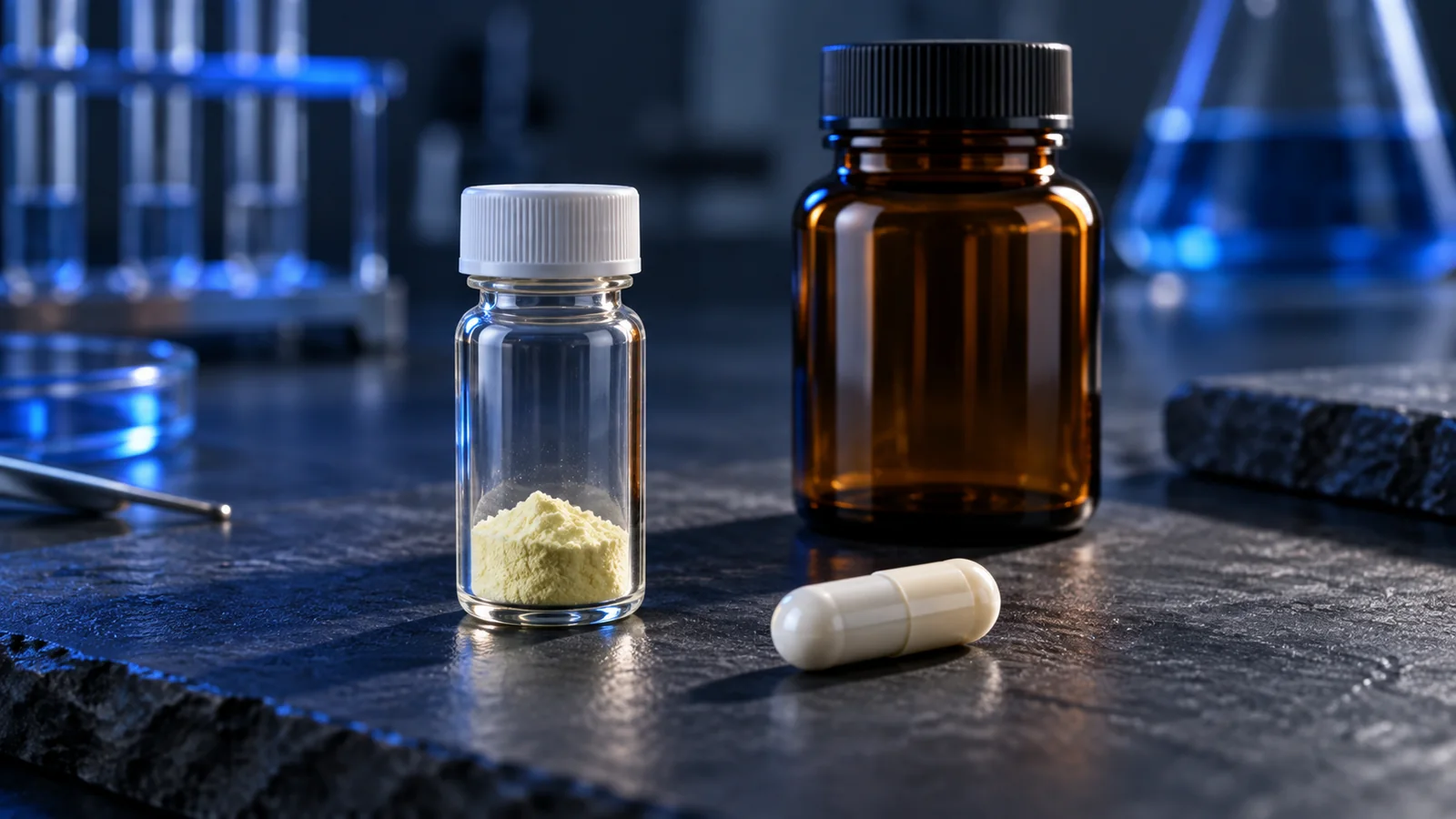
- Oral Formulations (Capsules/Liquids): When 5-Amino-1MQ is administered orally, it must pass through the digestive system and undergo first-pass metabolism in the liver. Because a percentage of the compound is lost during digestion, oral concentrations are inherently much higher. It is common to see oral research protocols utilizing 50mg to 150mg per day.
- Vial Formulations (Reconstituted Liquid): A 50mg vial of lyophilized powder meant for subcutaneous research has near 100% bioavailability. Bypassing the digestive tract means a significantly smaller amount is required to achieve the same systemic concentration.
If a buyer applies an "oral chart" (e.g., 50mg daily) to a "vial product," they will exhaust their 50mg bottle in a single day—a costly and inaccurate research protocol.
3. Why Do the Charts Conflict So Much?
Beyond delivery methods, several factors contribute to the chaotic landscape of 5-Amino-1MQ data:
- Extrapolation from Animal Data: Currently, there are no published human clinical trials for 5-Amino-1MQ. All baseline data stems from murine (mice) studies. Researchers use allometric scaling to convert animal data to Human Equivalent Doses (HED), but different mathematicians and researchers use different conversion factors, leading to conflicting charts.
- Purity and Fill Volume Variances: Not all products are created equal. A chart provided by a vendor selling 90% pure material will look drastically different from one utilizing >99% pure laboratory-grade material.
- Synergistic Stacking: 5-Amino-1MQ is often studied alongside NAD+ to maximize cellular energy metabolism. Protocols that include NAD+ or other metabolic agents often adjust the concentration of 5-Amino-1MQ downward, creating another layer of variation in recommended charts.
4. Securing Reliable 5-Amino-1MQ for Your Requirements
For clinic owners, resellers, and researchers, navigating this confusion requires partnering with a supplier that prioritizes transparency. Whether you are running cellular assays or developing a product line, you need absolute certainty regarding what is in your vial.
At Corapep, our brand positioning is built on Precision Analytical Compounds for Cellular Assays. We remove the guesswork from your sourcing process.
- Explore our 5-Amino-1MQ: Manufactured under strict Quality Control standards.
- Third-Party Verification: Never guess your product's purity. Use our COA Verification Portal to trace the exact analytical report of your batch.
- Scale Your Operations: If you are a clinic or reseller looking for tailored solutions, explore our Wholesale & Private Label options or inquire about Custom Peptide Synthesis for specific concentrations.
Ready to upgrade your supply chain? Browse our full Product Catalog, generate a customized quote via our Quote Page, or reach out directly to our team through our Sales Chat or Contact Page.